
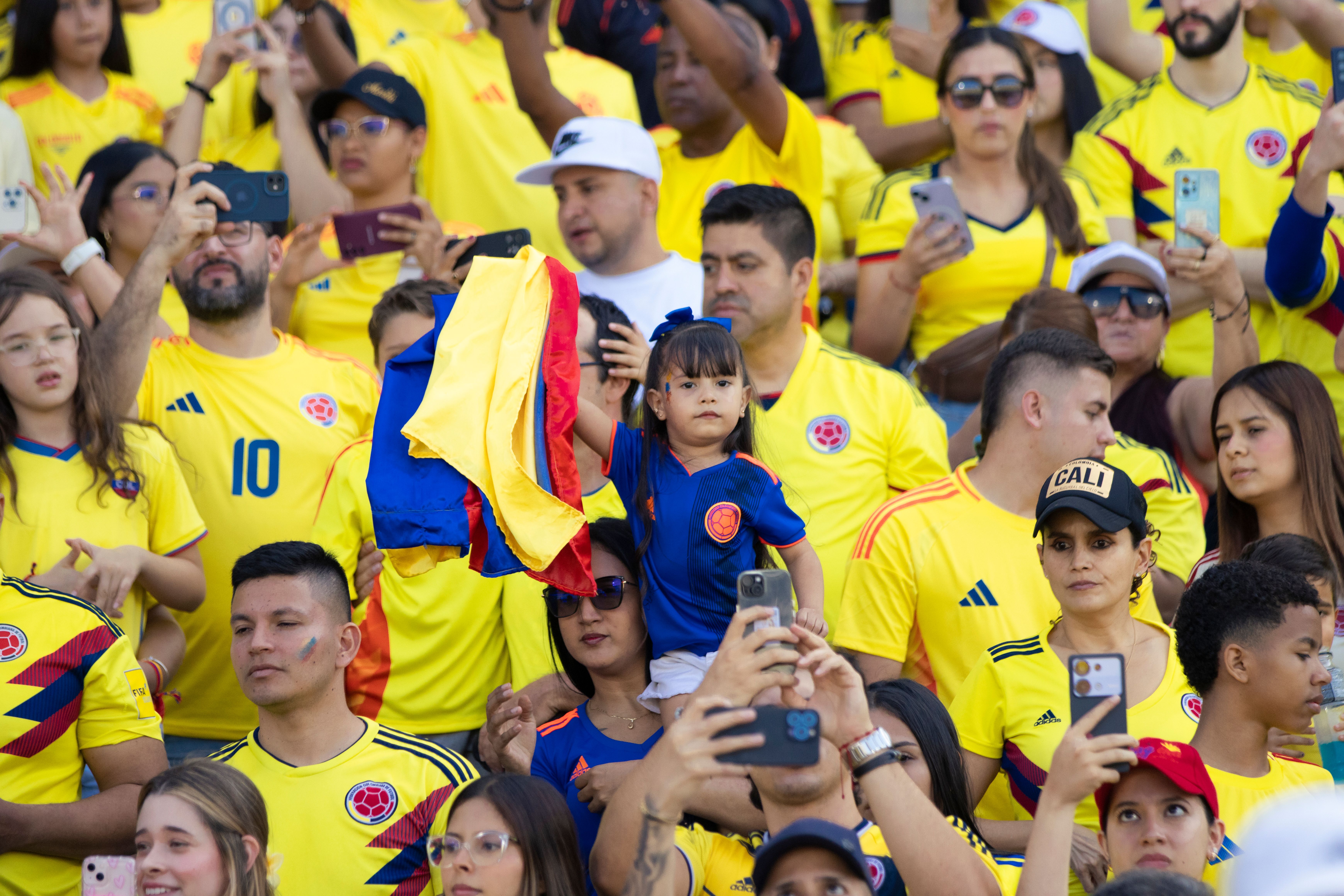

There are moments in sport when the scoreline becomes secondary. When what a nation's team does on a pitch speaks to something deeper, something about who a people believe themselves to be and what they're willing to demand of the future. Colombia's FIFA 2026 World Cup campaign was one of those moments. For Colombian communities across the United States and back home in Bogotá, Medellín, and Cali, the tournament wasn't just watched. It was felt.
A Tournament Unlike any Other Cultural Event
Colombian national identity in football has long been shaped by contradictions — flashes of brilliance followed by heartbreak, individual genius coexisting with collective fragility. But heading into FIFA 2026, something had shifted. The conversation among supporters wasn't cautious or qualified. There was an openly stated expectation that this squad could go deep. That confidence didn't emerge from nowhere.

Welcome to United Tribes
Where Colombian Culture Comes Alive
Join Your Tribe
Connect with your people
Discover Events
Watch parties & festivals
Find Colombian Businesses
Restaurants, markets & more
Earn Crown Credits
Get rewarded for engaging
It grew from years of watching Colombian players dominate at the club level across Europe and South America. It grew from a generation raised on the stories of 1990 and 1994, who no longer wanted to mythologize the past but to build something of their own. When fans in Colombian neighborhoods across Miami, New York, and Chicago gathered to watch, the energy wasn't "let's see what happens." It was "this is our time."
The Diaspora Watched Differently
For Colombian communities living in the United States, confidence in Colombia's World Cup team carried particular weight. The tournament became a shared emotional anchor, a reason to fly flags from apartment windows, to fill restaurants with cumbia playing between matches, to call family back home and talk for hours about tactics and dreams in the same breath.
This is what football does for diaspora communities that few other cultural moments can replicate. It collapses distance. A Colombian family in Queens and a grandmother in Barranquilla are watching the same thing at the same moment, and for those ninety minutes, geography dissolves. The 2026 campaign amplified this connection because the stakes felt genuinely high and the players carried themselves accordingly.
Ambition as a Cultural Statement
One of the most revealing dimensions of the Colombian international team was how Colombians talked about what they expected before and after them. Ambition, once treated cautiously in Colombian football discourse, had become normalized. Supporters debated not whether Colombia could advance but how far, and against which opponents.
This matters culturally. For a country that has spent decades managing international narratives shaped by conflict, poverty, and crime, projecting unapologetic ambition on a global stage is a form of reclamation. The team's presence at FIFA 2026, playing in front of massive crowds and earning international media coverage, served as a statement: Colombia belongs here, and we expect to win.
Resilience Redefined
Colombia's soccer culture has always celebrated resilience, but the 2026 campaign offered a more nuanced version of that quality. Resilience used to mean surviving. By 2026, Colombian supporters had redefined it to mean *recovering with intention* — bouncing back not just emotionally but tactically, adjusting expectations upward rather than retreating into familiar self-deprecation.
When matches were difficult, the community's reaction was analysis. Supporters dissected shape, rotation, and mentality with the same fluency as they once discussed magical individual moments. That shift signals a football culture that has matured. And maturity, in this context, is its own form of confidence.
Visibility and What It Means Beyond Football
The visibility Colombia earned through FIFA 2026 extended well beyond sport. International broadcast reach meant Colombian culture, its music, its food, and its people entered living rooms worldwide. Just as arepas and Colombian culinary traditions have traveled the world as quiet ambassadors of the culture, the national team performed that same ambassadorial function on the largest stage in football.
For Colombian business owners in the U.S., the tournament created real commercial energy. Restaurants saw surges in customers. Cultural products moved. Community events organized around match days drew people who hadn't engaged with Colombian spaces in years. Football, in this way, functions as infrastructure, building the conditions for everything else the community offers to become visible.
What the Campaign Revealed About the Next Generation
Perhaps the most significant thing Colombia's 2026 campaign revealed was what the next generation of Colombian-Americans now believes is possible. Young people who grew up hyphenated, Colombian and American simultaneously, watched their parents' homeland compete at the highest level with genuine contention, not sentiment.
That matters for identity formation. When your heritage country is seen internationally as a competitor, as a serious presence, it changes how you hold that identity. Pride becomes easier to carry. Cultural participation feels like joining something forward-moving rather than preserving something fragile.
Confidence That Outlasts the Final Whistle
Colombia's FIFA 2026 campaign offered something rarer than a trophy run — it offered proof that collective confidence, when rooted in culture and community, sustains itself beyond any single result. The shift in how supporters talked, gathered, and demanded from their team reflected a broader evolution in Colombian national identity: less apologetic, more grounded, fully aware of its place in the world.
For the Colombian diaspora in the United States, that confidence rippled outward into neighborhoods, businesses, and family conversations. Football became the catalyst, but the pride it activated was already there, built through food, music, language, and the daily work of cultural continuity across borders.
The energy, ambition, and community pride that defined Colombia's 2026 campaign are exactly what you'll find when you explore the Colombian community on United Tribes. In this space, that same cultural confidence shows up in the businesses, events, and stories worth celebrating.


